How can TTMS Fleet Mini track detention?
Fleet Mini can associate detention with a specific pickup or delivery stop, using arrival context, a configured threshold, elapsed time, driver notes and supporting files. The event remains part of the load timeline for review.

TTMS FLEET MINI
Stop exceptions,
in your pocket.
Track detention against a pickup or delivery stop using arrival, threshold, elapsed time, notes and supporting documents for owner review.
Explore the app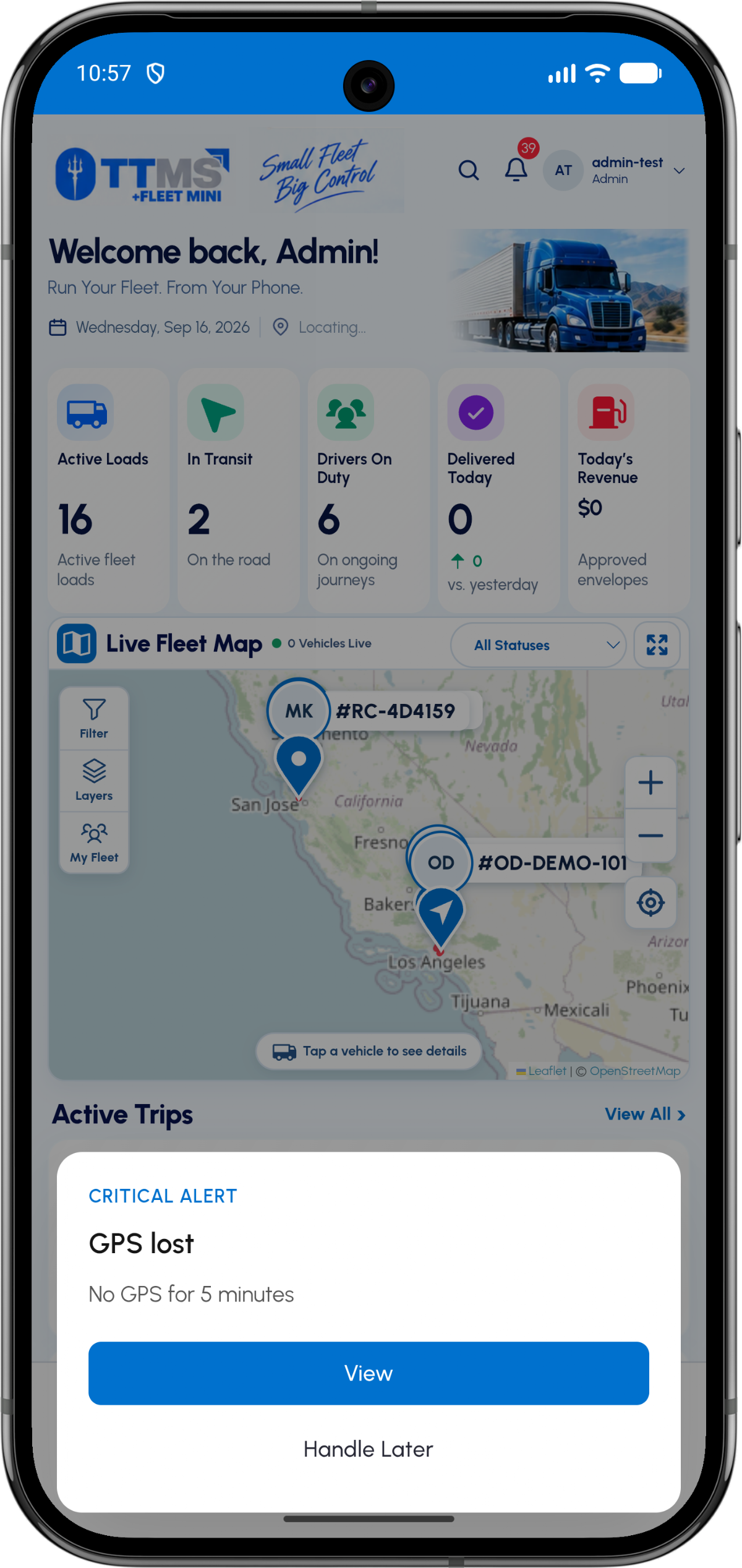
- Parent record
- Pickup or delivery stop
- Time anchors
- Arrival, threshold, start and end
- Evidence
- Notes, files and appointment context
- Boundary
- Chargeability depends on the agreement
Start with a reliable arrival
Arrival may come from a driver action, a reviewed geofence suggestion or both. The record should show which source created the event and when.
A configured free-time threshold can then distinguish normal waiting from active detention.
Keep evidence with the event
Notes, appointment information, facility messages and supporting images give the owner context when reviewing a detention claim.
Because the event belongs to a stop, it remains distinct from delays elsewhere on the same load.
Make the state visible
Detention active, detention ended and detention reviewed are different operational states. A visible timer can help the driver and owner respond while the issue is still occurring.
Final charge decisions may depend on the customer agreement and supporting documentation.
OPERATIONAL SEQUENCE
A workflow an owner and driver can both follow
The route ribbon makes the relationship between actions visible. Each step leaves context for the next person and the final review.
- 1Record arrival
- 2Apply configured free time
- 3Start detention state
- 4Collect notes and evidence
- 5End and review the event
QUESTIONS & ANSWERS
Questions fleets ask
Can geofencing start detention automatically?
A geofence can suggest arrival, but the fleet should preserve source and review context before relying on the event.
Is detention stored at the load level?
It remains part of the load timeline but should reference the exact stop where the waiting occurred.
What evidence is useful?
Appointment details, arrival and departure times, facility communication, driver notes and supporting documents are commonly useful.
Does tracking detention guarantee payment?
No. Payment depends on the rate agreement, customer rules and accepted evidence.
Last reviewed: September 18, 2026. Product scope and terminology checked against the current mobile experience.