Which trucking terms does TTMS Fleet Mini use?
Fleet Mini uses common trucking terms such as load, pickup, delivery, BOL, POD, detention, driver, truck, trailer, trip envelope, expense, settlement and ELD. Each term maps to a specific operational record or workflow.
TTMS FLEET MINI
Trucking terms,
in your pocket.
Learn the trucking and fleet-management terms used in TTMS Fleet Mini, including load, stop, BOL, POD, detention, trip envelope, ELD and owner-operator.
Explore the app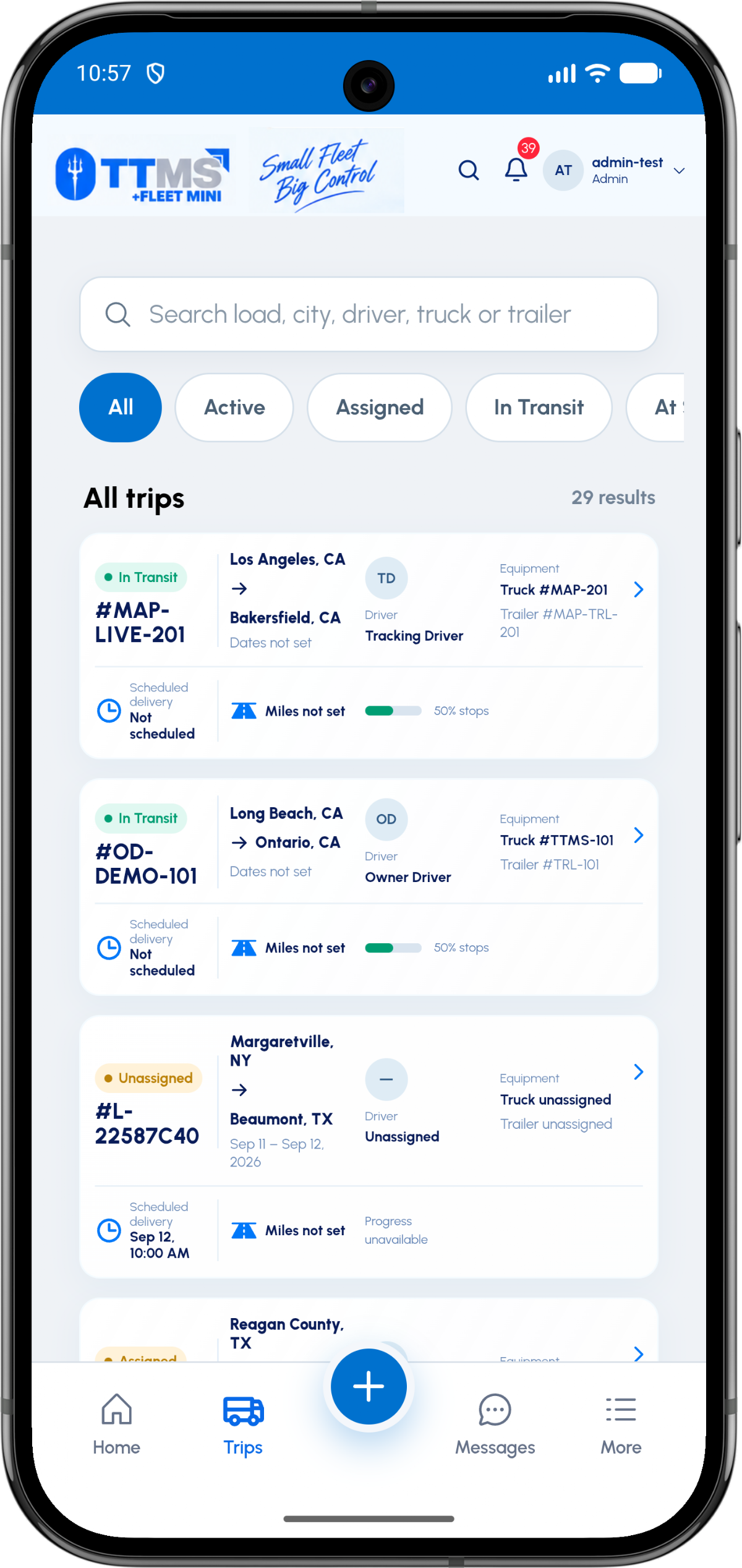
- BOL
- Bill of lading
- POD
- Proof of delivery
- ELD
- Electronic logging device
- OS&D
- Overage, shortage and damage
Load and stop
A load is the central freight movement record. A stop is an ordered operational location within the load, commonly a pickup or delivery.
A multi-stop load contains more than one pickup, delivery or operational stop.
Documents and evidence
A bill of lading, or BOL, records freight information associated with pickup. A proof of delivery, or POD, records delivery acceptance.
A trip envelope is the reviewed package of trip documents, mileage, expenses and completion checks.
People, equipment and compliance
A driver performs the trip. An owner-operator owns and operates a trucking business, often driving the equipment personally. Trucks and trailers are separate equipment records.
An ELD is an electronic logging device used for regulated driving records; phone-based operational tracking is a different data source.
OPERATIONAL SEQUENCE
A workflow an owner and driver can both follow
The route ribbon makes the relationship between actions visible. Each step leaves context for the next person and the final review.
- 1Load contains ordered stops
- 2Driver uses truck and trailer
- 3BOL supports pickup
- 4POD supports delivery
- 5Trip envelope supports closure
QUESTIONS & ANSWERS
Questions fleets ask
What is a load?
A load is the central record for a freight movement, connecting references, stops, assignments, status, documents and costs.
What is a trip envelope?
It is the post-trip review package that checks whether required operational records are complete.
What is detention?
Detention is waiting time at a stop beyond the configured or agreed free-time threshold, documented for review.
What is the difference between a truck and trailer?
The truck is the powered vehicle; the trailer is the separate freight-carrying equipment attached for a trip.
What is OS&D?
OS&D means overage, shortage and damage—exceptions where received freight quantity or condition differs from expectation.
Last reviewed: September 18, 2026. Product scope and terminology checked against the current mobile experience.